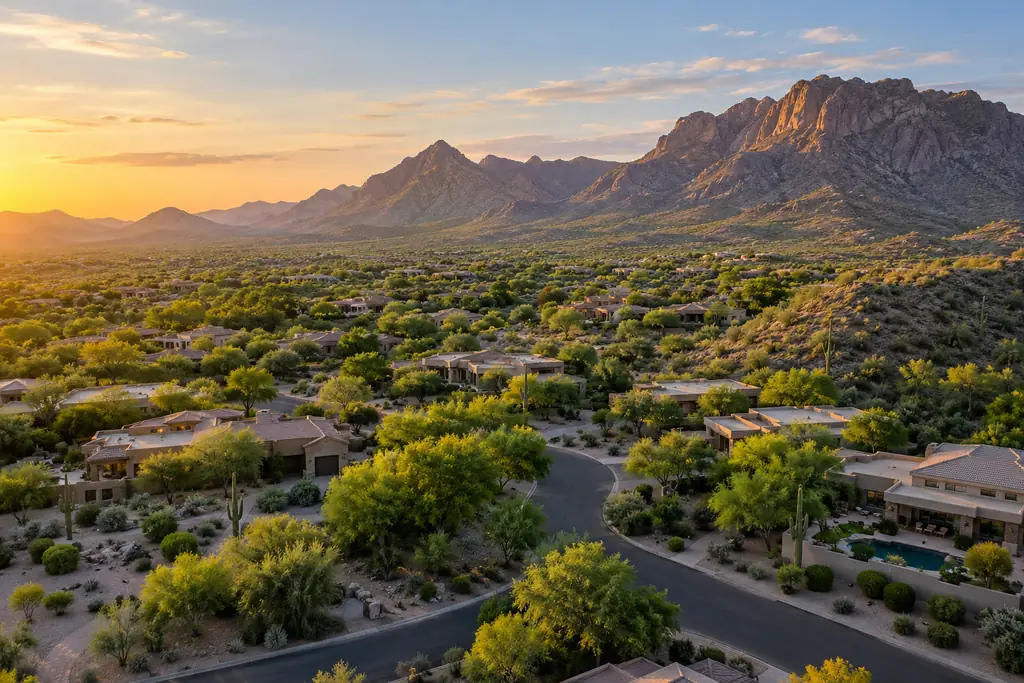
Illustrative image: aerial view of a tree-filled suburban neighborhood meeting the desertIllustrative image
Tempe, Arizona • Neighborhood Guide for Young Professionals

Where Should Young Professionals Live in Tempe, AZ? A 2026 Neighborhood Guide

Short answer: pick the part of Tempe that matches how you live. Walk-and-transit downtown, older homes near ASU, or quieter south Tempe. Below is a six-question way to choose, then how Tempe compares with nearby suburbs.

By Ryan Moxley, REALTOR® Updated July 9, 2026 My Home Group (480) 227-9143

Where Should Young Professionals Live in Tempe? The Short Answer

There is no single right neighborhood. The right part of Tempe is the one that fits how you actually live day to day. Most young professionals end up choosing between three broad settings:

  • Downtown Tempe (Mill Avenue and the Tempe Town Lake area) if you want to walk to restaurants, bars and events, and want to be near light rail and the Tempe Streetcar. Housing here is mostly apartments and condos.
  • Established neighborhoods near downtown and ASU if you want an older single-family home, townhome or small multifamily property close to the action, and you are comfortable living near a large university campus with student renters nearby.
  • South Tempe if you want quieter streets, more space and a driveway, and your commute is mostly by car.

These are general patterns, not rules. Every block is different, so use the checklist below, then tour at the times you would actually be home (weeknight evenings, weekend mornings, ASU game days).

How to Choose: Six Questions That Decide the Neighborhood

QuestionIf your answer is…Start looking at…
1. How walkable do you need it?Walk to dinner, coffee and events most daysDowntown / Mill Avenue / Town Lake area
2. Will you use transit?Yes, for work or going outAddresses within an easy walk of a light rail or streetcar stop (check the map on valleymetro.org)
3. What housing type?Apartment or condo with low upkeepDowntown and near-campus buildings
Single-family home, yard, garageEstablished central neighborhoods or south Tempe
4. Where and how do you commute?Downtown Phoenix or the airport side of townNorth and central Tempe near rail and freeway access
Chandler or the southeast Valley by carSouth Tempe
5. Nightlife or quiet?Close to nightlife, accept noise and event trafficDowntown and near ASU
Quiet evenings, less foot trafficSouth Tempe and interior residential streets
6. Rent or buy?Likely to move within a couple of yearsRent first, learn the neighborhoods
Staying several years, reserves in placeCompare buying vs. renting the same home type

1. Walkability

Downtown Tempe is compact and built around Mill Avenue, ASU's campus and Tempe Town Lake. Away from downtown, Tempe is mostly a grid of residential neighborhoods where daily errands usually mean a short drive or bike ride. If walkability matters, walk the route from the front door to the places you would actually go before you commit.

2. Transit access

Valley Metro light rail runs through Tempe, and ASU describes its Tempe campus as offering access to metro Phoenix "through public transit including light rail" (ASU's Tempe campus page, (accessed November 2, 2026)). Tempe also has the Tempe Streetcar and the city's Orbit neighborhood shuttles. Routes, stops and fares change, so confirm them on valleymetro.org and tempe.gov for the exact address you are considering.

3. Housing type

Tempe is largely built out, so most homes are resale. Downtown and the area around campus have the most apartments, condos and townhomes. Central and south Tempe are mostly single-family neighborhoods of varying ages. For a condo or townhome, read the HOA documents (rules, rental restrictions, reserves and dues) before you buy; Arizona law requires association documents to be provided to buyers on resale (A.R.S. §33-1260 for condominiums and A.R.S. §33-1806 for planned communities, accessed November 2, 2026).

4. Commute pattern

Tempe sits between Phoenix, Scottsdale, Mesa and Chandler, with several freeways and the light rail line. Which part of Tempe works best depends on which direction you commute. Drive or ride your real route at rush hour from each address you are considering; it is the most reliable test.

5. Nightlife vs. quiet

Living near Mill Avenue, Tempe Town Lake or ASU puts you close to restaurants, bars, concerts and game-day crowds. That is the point for some people and a drawback for others. Visit on a Friday night and on an event day. If quiet matters more, focus on interior streets away from major roads and the downtown core.

6. Rent vs. buy

Renting keeps you flexible and lets you learn the neighborhoods first. Buying can make sense if you expect to stay several years and have savings beyond the down payment and closing costs. Compare the full monthly cost of owning (mortgage, taxes, insurance, HOA dues, maintenance) with renting a similar home, and get a lender pre-approval before you shop. For more detail, see Phoenix rent vs. buy.

Before you sign a lease or contract

Test the commute at rush hour. Walk the block after dark. Check the nearest transit stops on valleymetro.org. For a purchase, read the HOA documents and the Seller Property Disclosure Statement (SPDS), and use your inspection period.
Tempe Areas at a Glance

These are broad descriptions to start your search, not boundaries. Tour each area yourself and check specific addresses.

AreaTypical housingDay-to-day feelOften fits
Downtown / Mill Avenue / Tempe Town LakeApartments, condos, some townhomesWalkable core, restaurants, events, near rail and streetcarPeople who want to walk and use transit
Neighborhoods near ASU and downtown (for example Maple-Ash and University Park)Older single-family homes, small multifamily, some condosClose to campus; mix of owners and rentersPeople who want a house near downtown
Central Tempe (for example around The Lakes and McClintock Drive)Mostly single-family, some townhomesResidential, mostly car-based errandsPeople who want space but a central location
South Tempe (for example the Warner Ranch area)Single-family subdivisions, some HOA communitiesQuieter, suburban, car-basedPeople who commute south or want more space

For the city overview, see the Tempe neighborhood page and Tempe real estate.

Suburbs Near Tempe to Compare

If Tempe does not fit your budget or lifestyle, buyers often compare these nearby areas. None is "best"; each trades something different.

  • Chandler: suburban, many master-planned neighborhoods. See Chandler vs. Tempe.
  • Gilbert: suburban and family-oriented. See Gilbert vs. Tempe.
  • Mesa: large city to the east with a wide range of housing types.
  • Ahwatukee (Phoenix): residential area southwest of Tempe.
  • South Scottsdale: north of Tempe, a mix of older homes and newer redevelopment.

Use the same six questions for each, and test the commute from each one.

Schools: Check the Address, Not the City

School district lines in Tempe do not follow city limits. Kyrene School District, for example, says its boundaries "encompass all of Ahwatukee and parts of Chandler, Guadalupe, Tempe, and the Gila River Indian Community," and that students are assigned to a home school by street address (Kyrene enrollment page, (accessed November 2, 2026)). Depending on the address, younger grades may be served by Tempe Elementary or Kyrene, and high school by Tempe Union.

Enter the exact address on the district's tool and confirm with the district before you sign. This guide does not rate schools.

If You Decide to Buy in Tempe

  1. Get pre-approved so you know your budget and monthly payment.
  2. Narrow the area using the six questions above.
  3. Make an offer on the Arizona REALTORS® purchase contract.
  4. Review disclosures: the SPDS and, for HOA homes, the HOA documents.
  5. Inspect during the inspection period and respond with a BINSR (Buyer's Inspection Notice and Seller's Response) if needed.
  6. Close: Arizona closes when the deed records.

Down payment programs exist in Arizona; ask an approved lender which you qualify for.

Ryan Moxley, REALTOR®

My Home Group • Top 1% Nationally • ADRE License SA643872000

Ryan Moxley is a top 1% REALTOR® with My Home Group (ADRE SA643872000) serving Tempe and the greater Phoenix metro under Ryan Moxley | Moxley Collective. He can help you compare Tempe neighborhoods against your commute, budget and lifestyle, and walk you through renting vs. buying before you decide.

Frequently Asked Questions: Living in Tempe

Where should young professionals live in Tempe, Arizona?
It depends on how you want to live. If you want to walk to restaurants and nightlife and use transit, look first at downtown Tempe around Mill Avenue and Tempe Town Lake, where housing is mostly apartments and condos. If you want an older single-family home or duplex close to downtown and ASU, look at the established neighborhoods nearby. If you want a quieter street, more space and a car-based commute, look at south Tempe. Before you sign or buy, test your real commute at rush hour, walk the block at night, and check transit stops on valleymetro.org.
Is Tempe a good place to live without a car?
Parts of Tempe can work with little or no car use. Valley Metro light rail runs through Tempe, and ASU describes its Tempe campus as connected to metro Phoenix by public transit including light rail. The Tempe Streetcar and the city's Orbit neighborhood shuttles add local options. How well it works depends on the specific address and where you work, so map door-to-door trips on valleymetro.org and check tempe.gov for current routes and fares before committing.
Should I rent or buy in Tempe as a young professional?
Renting usually fits if you may change jobs or cities soon, want to test a neighborhood first, or are still building savings. Buying fits better if you expect to stay several years, have reserves beyond the down payment and closing costs, and have compared the full monthly cost, including any HOA dues, with renting a similar home. A lender can give you a pre-approval and payment estimate; an agent can show you what recently sold nearby. Ryan Moxley, a Top 1% REALTOR® with My Home Group, can walk you through current listings and a monthly-cost comparison.
What are the best suburbs near Tempe?
There is no single best suburb; it depends on your commute, budget and lifestyle. Buyers who like Tempe often also compare Chandler, Gilbert, Mesa, the Ahwatukee area of Phoenix and south Scottsdale. Each has different housing types, school districts and drive patterns, so compare them on the same checklist you use for Tempe neighborhoods and test the commute from each.
How do I check which schools serve a Tempe address?
School districts in Tempe do not follow city limits. Depending on the address, a home may be served by Tempe Elementary School District or Kyrene School District for younger grades and by Tempe Union High School District for high school. Use each district's own boundary or school-finder page with the exact address, and confirm with the district before you sign a lease or contract. Boundaries can change; Tempe Elementary, for example, approved boundary changes for some schools in February 2025.

Buy or Sell in Tempe — Let's Talk

Trying to decide where in Tempe fits your life, or whether to rent or buy? Reach out for a free consultation with no obligation.

Keep Reading
Cave Creek, Arizona Lifestyle & Real Estate Guide 2026Chandler AZ New Construction Complete Buyer's Guide 2026Chandler vs Tempe AZ 2026 — The Complete City ComparisonGilbert vs Tempe AZ 2026 — Family Suburb vs Urban College TownPhoenix Arts & Culture Neighborhoods Guide 2026: Where to Live…
All Phoenix Metro Neighborhoods guides →
Explore The Market
Tempe Real Estate →All Areas We Serve →What Is My Home Worth? →

Talk To A Local Expert

Get answers specific to your situation

Ryan Moxley is a Top 1% REALTOR® with 20+ years in real estate & finance in the Phoenix metro — a Miami University finance graduate and former mortgage broker who personally invests in and renovates Valley homes. One call, real answers, no pressure.

Call/Text (480) 227-9143 Tempe Real Estate Book A Call